• English
  • Français
Bladder Cancer CanadaBladder Cancer CanadaBladder Cancer CanadaBladder Cancer Canada
  • Bladder Cancer
    • See Red?
    • What is Bladder Cancer?
    • Statistics and Risk Factors
    • Symptoms and Diagnosis
    • Staging and Grading
    • Types of Bladder Cancer
      • Non-Muscle Invasive Bladder Cancer
      • Muscle Invasive Bladder Cancer
      • Metastatic Bladder Cancer
      • Upper Tract Urothelial Carcinoma
    • Treatment Options
      • TURBT
      • BCG
      • Chemotherapy and Radiation
      • Bladder Removal Surgery
      • Immunotherapy
      • Bladder Preservation Options
      • Palliative Care
      • Clinical Trials
      • Advanced Bladder Cancer Treatment
    • Research and Studies
  • Patients
    • Get Support
      • Support Groups
      • One2One Peer Support
      • Online Discussion Forum
      • Contact Us by Phone or Email
    • Navigating Your Diagnosis
      • Newly Diagnosed?
      • Coping With Emotions
      • Health and Wellness Resources
      • Clinical Trials
    • Educational Resources
      • Guidebooks
      • Webinars and Videos
      • Podcast
      • Seminars
      • Newsletter
      • Glossary
    • Upcoming Events
    • News and Stories
    • Links and Other Resources
  • Get Involved
    • Donate
    • Fundraise
    • Volunteer
    • Share Your Story
    • Patient Study Recruitment
    • Patient Self-Advocacy
    • Bladder Cancer Awareness Month
    • Your Impact
  • Health Care Practitioners
    • Doctor Resources
    • BCC Research Grant Applications
    • BCC Research Grant Recipients
    • CBCIS
    • CBCRN
    • Medical Advisory Board
  • About Us
    • Who We Are
    • Board of Directors
    • Staff
    • Medical Advisory Board
    • Sponsors and Partners
    • Financial Statements and Annual Reports
    • Newsletter
    • Contact Us
  • Shop
  • Walk With Us
  • Donate

Home » Patients » Educational Resources » Bladder Cancer Guidebooks » Guidebook Translations » Radical Cystectomy/Bladder Removal Surgery for Bladder Cancer – Patient Guide

Print this page →

icon-notalone

You are not alone

This Patient Guidebook was created by people just like you – bladder cancer patients and their caregivers. It’s designed to offer you support, encouragement and tips on how to deal with the procedures and treatments for your bladder cancer. It can help you understand your disease and what to expect, the treatments you may be offered and how to manage your disease in the years ahead.
We are not medical professionals and you should always turn to your medical team for advice first. But we have been where you are now and have experienced what you are feeling. To ensure accuracy, this Guidebook has been reviewed by a team of medical professionals.

This Guidebook will talk about common approaches to treating muscle-invasive bladder cancer (MIBC). Keep in mind that there can be some differences, depending on the practices of your medical team and on your specific situation.

We will not be using a lot of medical language, except where it might help you better communicate with your medical team and understand your disease. You’ll find a handy glossary of terms on Bladder Cancer Canada’s website at https://bladdercancercanada.org.

Remember, you’re not alone. All of us at Bladder Cancer Canada are passionate about helping you to live a full and satisfying life – even after a diagnosis of bladder cancer. We’re doing it and so can you.

The birth of this guidebook

What you are about to read is the result of the creative vision of the late Greg Neely, who was Vice-President of Bladder Cancer Canada and a bladder cancer patient himself. Greg saw the need for a single source of information written from the viewpoint of Canadian bladder cancer patients and their caregivers. He wanted it clear, simple, and easy to understand – that’s Greg’s style.

Print this page →

Radical Cystectomy/Bladder Removal Surgery for Bladder Cancer – Patient Guide

WHAT CAUSES BLADDER CANCER?

As with many types of cancer, one of the leading risk factors of the disease is smoking. Those who smoke may be up to four times more likely to get bladder cancer. People who work with certain chemicals may also be at risk – leather workers, hairdressers, mechanics and painters, among other occupations. Exposure to radiation has also been linked to bladder cancer. Caucasian men may also be at greater risk.

But the simple truth is that many will develop bladder cancer for no known reason. You may be one of those people. At this point, asking “why” is not nearly as helpful as focusing on “what now.”

Many of us never knew bladder cancer existed before our diagnosis. But, it’s more common than you might think, as it’s the 5th most common cancer in Canada.


MUSCLE-INVASIVE BLADDER CANCER

Approximately 25% of bladder cancers are muscle invasive. It means that the tumours have grown through the lining of the bladder into or through the bladder muscle. In most cases, this type of cancer is treated through surgery to remove the bladder (called a “radical cystectomy”) and creation of a new path for urine to leave the body. We’ll explore the treatments in more depth as we go along.


UNDERSTANDING HOW THE BODY WORKS

Radical cystectomy is a big operation involving two body systems – the urinary and the intestinal systems. The more we understand about how the two systems work, the better our recovery will be. Here’s a brief description of these two vital systems.

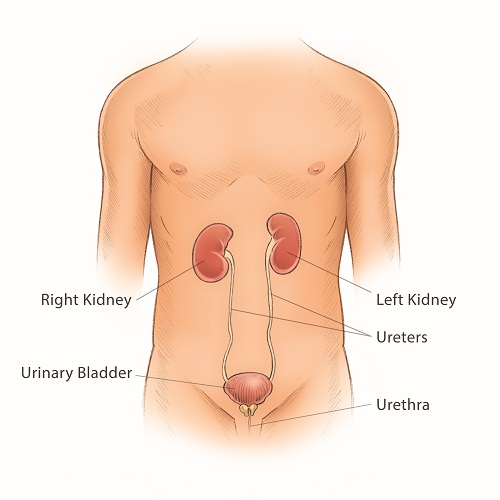
The Urinary System

The body takes nutrients from food and changes the nutrients to energy. After the body takes the nutrition that it needs, waste products are left behind in the blood and in the bowel.

The urinary system removes waste from the blood. Urea is made when foods containing protein (meats and some vegetables) are broken down in the body and carried in the blood to the kidneys.

Our two kidneys:

  • Remove liquid waste from the blood in the form of urine
  • Balance salts and other substances in the blood
  • Help regulate blood pressure
  • Make erythropoietin, a hormone that helps make red blood cells

Parts of the urinary system:

  • The kidneys remove waste from the blood through tiny filtering units called nephrons. Water and waste substances make the urine as they pass through the nephrons and down the tubules of the kidney.
  • The two ureters are narrow tubes that carry urine from the kidneys to the bladder. Muscles in the ureter walls continually tighten and relax forcing urine downward, away from the kidneys. About every 10 to 15 seconds, small amounts of urine are emptied into the bladder from the ureters. If urine backs up, or is allowed to stand still, it can lead to kidney infection, damage, or failure.
  • The bladder is a hollow organ located in the lower abdomen. The bladder’s muscle walls relax and expand to store urine, and contract and flatten to empty urine through the urethra.
  • Two, circular sphincter muscles help keep urine from leaking out of the body by closing tightly like a rubber band around the opening of the bladder.
  • Nerves in the bladder alert a person when it is time to urinate, or empty the bladder.
  • The urethra is the tube that allows urine to pass outside the body. The brain signals the bladder muscles to tighten, and these squeeze urine out of the bladder. At the same time, the brain signals the sphincter muscles to relax to let urine exit the bladder through the urethra. When all the signals occur in the correct order, normal urination occurs.

The Intestinal System:

The intestines are a long, continuous tube running from the stomach to the opening where the stool leaves the body (anus.) The upper part of the intestine is the small intestine and the bottom part is the large intestine, which ends in the rectum. Absorption of nutrients and water happens in the intestines.

The small intestine (small bowel) is about 20 feet long and about an inch in diameter. Its job is to absorb most of the nutrients from what we eat and drink. The small intestine is divided into the duodenum, jejunum and ileum.

The large intestine (colon or large bowel) is about 5 feet long and about 3 inches in diameter. It creates formed stool once the nutrients are absorbed. As stool enters the rectum, nerves there create the urge to have a bowel movement.

Now that we understand the urinary and intestinal system, let’s look at the steps in diagnosing your cancer. 

Print this page →

STAGING AND GRADING YOUR BLADDER CANCER

Laboratory analysis of the material taken out during your Transurethral Resection of Bladder Tumour (TURBT) is used to determine the type and stage of the cancer. According to the Canadian Cancer Society, staging classifies a cancer based on its extent in the body. See below for a description of each stage.

Staging and grading bladder cancer – Bladder Cancer Canada

STAGING

Tis – Carcinoma in situ, sometimes called CIS.

Ta – Non-invasive papillary carcinoma.

T1 – The tumour is in the first layer of the bladder lining, but not the surrounding muscle.

T2 – The tumour has grown into the muscle. In stage T2a, the tumour is in the inner half of the muscle layer and in stage T2b, the outer half.

T3 – The tumour has spread to the fatty layer around the bladder muscle. This invasion of the fat is detected only under the microscope in T3a but by visual appearance or feel in T3b

T4 – The tumour has spread to organs next to the bladder (T4a) or to the intestines or wall of the abdomen or pelvis (T4b).


All the information that can be gathered about the extent of the tumor without removing the bladder is called “clinical staging”. Clinical staging depends on physical examination, TURBT, and scans. The true extent of the tumor is only certain after the bladder has been removed surgically and carefully examined under the microscope. This is referred to as “pathological staging.”


GRADING

In addition to showing what stage your cancer is, the pathology report following your TURBT will also generally show whether your tumour is “high grade” or “low grade.” A higher-grade cancer may grow and spread more quickly and may require immediate or more aggressive treatment. Almost every muscle-invasive bladder cancer is a high-grade tumour.

IMPORTANT

Keep a copy of all pathology reports which will tell you important information about the stage and grade of your tumour.

Print this page →

icon-treatment

HOW WILL MY CANCER BE TREATED?

Although treatments to preserve the bladder (especially chemotherapy combined with radiation) may be an option in selected patients (refer to the Guidebook on Bladder Preservation for more information), the majority of patients with muscle-invasive bladder cancer will be treated with radical cystectomy – major surgery to remove the diseased bladder and to construct a new urinary diversion.

In men, the surgeon will remove the bladder, prostate, and seminal vesicles. In women, the surgeon may remove not only the bladder, but also the uterus, ovaries, fallopian tubes, cervix, and the front wall of the vagina. In both men and women, the surgeon will remove pelvic lymph nodes. This means that the surgeon will peel fatty tissue off the blood vessels on each side of the pelvis and the pathologist will search through this fatty tissue to identify individual lymph nodes (often 10-30 nodes) to check for cancer involvement.

For both men and women, the surgeon may also remove the urethra, depending on which diversion is to be created.


THE BLADDER IS GONE – NOW WHAT?

Once the bladder is removed, your surgeon needs to create a new way for the urine to drain from the kidneys to outside the body. The options are called “diversions.” Three diversions are common – ileal conduit, neobladder and Indiana Pouch. You’ll want to discuss these with your surgeon to understand which is appropriate for you and why.

ILEAL CONDUIT (OSTOMY)

The surgeon will take a short segment of the ileum (part of the small intestine) to create a channel for the urine to pass out of the body. The remaining bowel is sewn back together. The two ureters from the kidneys which drain the urine are attached to this segment and an opening in the right side of the abdomen is created, called a stoma. A removable bag, called a urostomy pouch, is affixed to the skin surrounding the stoma to catch the continuous flow of urine.

Advantages: Shorter and relatively simple surgery, fewer potential complications, shorter segment of bowel re-purposed.

Disadvantages: Must always wear an external pouch to collect urine, possible skin irritation/breakdown around stoma, infections, body image issues, potential for odour, potential for urine leak around the stoma bag.

NEOBLADDER

The surgeon will create a “new” bladder out of a longer segment of small intestine in the same place where the old, diseased bladder was. This neobladder will be attached to the ureters from the kidneys and also attached to the urethra so that voiding urine is done as before.

The neobladder is not a muscle like your original bladder was, and does not have the same “fullness” sensations as does a bladder, so you must learn how to “hold” your urine (become continent) and how to effectively empty it using the pelvic muscles.

Advantages: Near normal function, no body image issues, no external pouches, no odours.

Disadvantages: Incontinence (some may never regain full control), the inability to empty the neobladder (some may need to use a catheter daily to empty the neobladder), longer surgery time, more challenging recovery period.

INDIANA POUCH

The surgeon will take a segment of large intestine and an adjoining portion of the ileum to make an internal pouch into which the ureters flow. The short piece of small intestine is brought to the surface of the abdomen (the stoma). There is no external pouch. The stoma is very small (size of a dime), and can be covered with a bandage. A catheter inserted into the stoma is used several times per day (every 3 to 6 hours) to empty the pouch.

Advantages: No external pouch, no odours, no body image issues.

Disadvantages: Longer surgery time, the need for catheterization, possible risk of leakage from the stoma, scarring of the stoma making catheterization difficult, stones in the pouch. More challenging recovery period.

Print this page →

COMMON ISSUES FOLLOWING RADICAL CYSTECTOMY SURGERY

Radical cystectomy and creating a urinary diversion is major abdominal surgery. As with all major surgeries, some issues are bound to arise. Some of them gradually disappear and others you adapt to over time.

  • Temporary loss of appetite
  • Reduced energy
  • Fatigue
  • Loss of weight
  • Infections
  • Erectile dysfunction in men (you need to discuss potential treatments for this with your surgeon)
  • Painful intimacy in women
  • Body image issues
  • Anxiety
  • Feeling “different”
  • Mucus in urine (which is continually produced by the intestinal section used to make the diversion) is unsightly and can rarely cause blockage and the need for catheterization


CHEMOTHERAPY

Before removing the bladder, chemotherapy (or “chemo”) is often recommended (called “neoadjuvant chemotherapy”). The purpose of the treatment prior to surgery is to stop the disease from spreading through the blood or lymph system to other parts of the body and to reduce the tumours. In addition, chemotherapy is usually better tolerated prior to major surgery.

Not everyone is a candidate for pre-operative chemotherapy, however. This can be due to poor kidney function or poor hearing, for example. Some patients do not get pre-operative chemotherapy but end up with high-risk features in the bladder (extension into the fat or adjacent organs) and/or lymph nodes (cancer in the lymph nodes) removed during surgery. In such cases, it may be advisable to have post-surgery chemotherapy (called “adjuvant chemotherapy”). In general, it is preferential to give chemotherapy before surgery because it is then more likely that the patient will be able to get both treatments. If the patient has a complication after surgery or generally recovers slowly from surgery, it may not be possible to give post-surgery chemotherapy.

Chemotherapy has side effects which can be unpleasant and these must be taken into account by both you and your doctor. However, since the goal is to extend life with good quality, you should make an informed decision, based on the recommendation of your doctor.

Side Effects of Chemotherapy

Side effects of chemotherapy will depend on the type of drug used and the dose, how the drug is given and your overall health. They can happen any time during or after chemotherapy. Most side effects go away when chemotherapy is over, although some side effects may be longer-lasting or even be permanent.

Some of the most common side effects of chemotherapy drugs are fatigue, nausea, changes to blood cell counts, increased risk of infection, loss of appetite, effects on bowel movements and urination, and hair loss. It’s important to let your medical team know of any side effects that you experience, because many of them can be treated. Hair usually grows back after treatments have stopped.


IMMUNOTHERAPY

Some patients will receive immunotherapy after radical cystectomy. These drugs activate the patients own immune system to get rid of any residual cancer cells. They are given intravenously every 2-6 weeks. They are given to patients who still have muscle invasive bladder cancer after pre-operative chemotherapy, or to patients who have spread of cancer beyond the bladder and are unable to receive chemotherapy.


IMPORTANT

Don’t hesitate to call Bladder Cancer Canada and ask to speak with someone who has had the surgery you are preparing to receive. We have many peer support volunteers who will answer any questions you have, based on their own experience and acquired knowledge. It’s a big help to chat with someone who has been in your shoes – and is surviving and thriving. We know. We have been there!

Print this page →

CLINICAL TRIALS

In addition to the therapies approved by Health Canada, you may be able to access other bladder cancer therapies through a clinical trial.

A clinical trial is a research study that tests how well a new medical approach works in people. Each study answers scientific questions and tries to find better ways to prevent, screen for, diagnose, or treat a disease such as bladder cancer. By participating in a clinical trial, you’ll be helping researchers answer important questions that will further the development of new effective treatments. Clinical trials may also provide you with another option in your treatment plan.

Clinical trial websites will help you find clinical trials that may be available in your area. Here’s one website you can check: www.canadiancancertrials.ca. This site lists Canadian trials only. You can narrow your search by selecting bladder cancer under ‘Select a Cancer Type’. You may need to select “Show More” if bladder cancer does not display on the list you see. You can also search by province, city or trial centre.

It’s very important that you discuss with your medical team whether a clinical trial is right for you.


QUESTIONS TO ASK YOUR SURGEON BEFORE SURGERY

  • Can you explain the stage and grade of my cancer and what that means for my treatment?
  • What are all the guideline-recommended treatment options for my bladder cancer?
  • Will I need chemotherapy?
  • Do you construct neobladders and Indiana Pouches as well as ileal conduits? (You’ll find more information about these surgeries on the following pages.)
  • What are the common complications of surgery and long-term effects of the disease?
  • What limitations will this surgery impose on my life (physical, emotional, sexual)?
  • What kind of follow-up will I require from you?
  • Are there any patients of yours with whom I can speak who have had this surgery?
  • Am I able to obtain a second opinion from a major cancer/teaching centre?
  • Would I be suitable for a clinical trial?

When you meet with your surgeon, take a family member or close friend with you to take notes and to be a listening ear. You’ll miss some of the information if you are by yourself.

Write down questions you want the surgeon to answer before you get there so that you don’t forget them. You could even ask permission to record the interview so that you can replay the questions and answers when you get home.


PREPARING FOR THE SURGERY

What to bring to the hospital:

  • Slip-on shoes or slippers – you’ll be walking a lot
  • Some books to read
  • Tear-away sports pants to use when you tire of the hospital gown
  • A list of all your medications
  • You should not bring valuables into the hospital that may be lost or stolen


WHAT TO EXPECT AFTER YOUR SURGERY

As you can see, radical cystectomy is very major surgery and you’ll have a lengthy recovery. Many parts of the body are affected during the surgery and need time to heal. On average, your hospital stay will be 5 to 10 days. Walking starts the day after surgery. This helps the bowels to start working again. Remember, this is bowel surgery too, not just bladder surgery! Expect to be on a liquid diet for the first few days before solid foods are gradually introduced. While in hospital, you’ll have a number of IV lines and tubes, depending on your type of surgery. These will provide pain control, urine drainage and drainage of excess fluid from the surgical site.


RETURNING HOME AFTER SURGERY

It’s not unusual for your weight to change during your hospital stay and first few weeks at home. There will be some muscle and fat weight loss, but there could be some weight gain through fluid retention. The excess fluid will gradually be cleared by the kidneys.

You’ve had major surgery, so your recovery will be gradual. Keep a record of your progress – how many and what length of walks you’ve taken (even walks in the hallways of your home count).

In men, the scrotum, which contains the testicles, may swell considerably.

It’s important to keep the incision clean (gently, using soap and water) and dry until it heals. If you have any issues, call the urologist’s office or urologist on call. If you develop a fever, go to the nearest Emergency Room as soon as possible (it may be an indication of infection).


EATING AND NUTRITION

You’ll need to eat small, frequent meals, which are easier on the healing bowels and shrunken stomach. You must drink at least 64 ounces of water (eight 8-ounce glasses of water or other liquids) per day. This is necessary to keep the kidneys clear, keep mucus thinner and easier to pass and not block up anywhere, and keep stools softer and easier to pass.

Mucus will continue to be produced by the parts of the intestines that were used for the diversion, probably forever. So, drinking lots of water will become a lifetime commitment.

Soups and stews are easy to digest, easier on the healing bowels and the easiest way to keep high nutrition for healing (try grating vegetables into soups or stews). For the first weeks, avoid fats and high-fibre foods, like popcorn and raw or undercooked vegetables.


BOWEL CARE

You’ll need to keep your stool soft as the bowel heals. Daily stool softeners may be recommended by your surgeon (they’re available over the counter at drug stores). You’ll want to limit straining while having a bowel movement to help the bowel heal, avoid putting a strain on the stitches or staples and reduce the risk of haemorrhoids.

If you are constipated, some fibre intake may help, but it also means drinking plenty of water, as the fibre needs lots of water to work as a softener (the fibre can cause constipation if you don’t drink enough water).

There are cases where a blockage can occur in the bowel, often at the point where the sections of the bowel were re-joined during surgery. Walking a lot will help and sometimes chewing gum is recommended.


EXERCISE

The bowels need gentle physical activity to start working again. Walking is the best form of exercise for the first six weeks to three months – the body’s healing time.


EMOTIONS

Your emotions can best be described as “a rollercoaster.” That’s perfectly normal – after all, you’ve been diagnosed with cancer, you’ve had major abdominal surgery, and you’re faced with a new lifestyle. It helps to have supportive family and friends around you. Don’t be afraid to express your emotions by talking to others who’ve gone through what you are.

Contact us at Bladder Cancer Canada and we can put you in touch with someone. Our contact information is at the end of this Guidebook.  

Focus on your task – recovery and creating a new lifestyle. Remember, your positive attitude will be a key element in your recovery.

Print this page →

AT HOME WITH YOUR ILEAL CONDUIT (OSTOMY)

The first week after your surgery your stoma may be tender and may be dark or bruised, swollen or blister-like or have spongy or yellow tissue around it.

This will start to look more normal in a few days. You’ll also notice stitches attaching it to your skin. These will be absorbed on their own and the swelling should go down in three or four weeks.

A normal healthy stoma looks soft, moist, red or pink and shiny. The skin around your stoma should look like the rest of the skin on your abdomen. It should be free of rashes, redness, scratches and bruising. If the stoma becomes irritated, get in touch with your stoma nurse, as there are products to help.

Your nurses in the hospital or home care will teach you how to empty, clean and change your new urine collection pouch and how to set up a night collection system.

Once your stoma size has stabilized, you’ll determine the correct size for your urostomy bag, using the stoma measuring devices supplied by the ET nurse and the ostomy supply companies in their sample kits.

If your stoma is round, experienced patients recommend using an external bag with an opening pre-cut to size. This avoids trying to precision cut a round hole – not easy and certainly not fun! Many of us find that a one-piece appliance (another name for the urostomy bag, also called a pouch) is easier to handle than a two-piece unit with a flange and then adding the bag, which is much bulkier. But try them both.

Another tip – for men, suspenders are a lot easier on the appliance and the area around the stoma than a belt.

Again, this is something that you will try and work with and find what combination best works for you.

Supplies are available at home healthcare or other medical supply stores. Experiment with different ostomy products and contact the providers as they have patient support personnel who can help. Major suppliers include Hollister (www.hollister.com/canada/ostomy/) and Coloplast (www.coloplast.ca/Ostomy/). Both companies offer free samples of their products.


AT HOME WITH YOUR NEOBLADDER

Neobladder patients are typically sent home with two tubes – a catheter in the urethra and a “suprapubic” catheter in the abdomen, both helping drain the new neobladder. Your nurses in the hospital or home care will teach you how to “flush” the tubes to clear mucus.

This flush needs to be done at regular intervals, as recommended by your medical team, usually about every four hours day and night. It doesn’t hurt to flush more frequently. You should seek immediate medical attention if you are unable to flush the mucus and urine through the tubes – there may be a blockage.

Since you will be sleeping with urine collection bags attached to tubes, experiment until you find a comfortable sleeping position. You may need something to sleep in other than pyjamas, because of the restrictions of the tubes.

After the tubes are removed in a few weeks, it’s normal to have incontinence and you may need to wear disposable underwear or pads. Daytime continence usually returns, but night time incontinence can be a lifetime issue. Lots of patience is essential. Washable bed protectors (available at home healthcare or medical supply stores) and incontinence pants are often necessary.


AT HOME WITH YOUR INDIANA POUCH

The first week after your surgery your stoma may look dark or bruised, look swollen or blister-like or have spongy or yellow tissue around it. This tissue will peel off in a few days and start to look more normal.

A normal healthy stoma looks soft, moist, red or pink and shiny and should be flush with the skin. The skin around your stoma should look like the rest of the skin on your abdomen. It should be free of rashes, redness, scratches and bruising.

Typically, patients are sent home with a “suprapubic” catheter in the abdomen and usually a small tube in the new stoma, both helping drain the pouch of urine and mucus for several weeks.

Your nurses in the hospital or will also teach you how to take care of your stoma and catheterize your new Indiana Pouch, once the tubes are taken out. Usually, you will begin by catheterizing every two hours for the first week or so, gradually increasing the time between catheterizations as the pouch begins to stretch. Catheters are available at home healthcare or other medical supply stores.

A Lifetime of Checkups

Of course, it’s a great relief to hear your doctor say the words “all clear” after your first checkup. However, that’s not the end of this chapter of your life. You’ll need regular checkups, usually including CT scans and blood work. These checkups will be more frequent at first and gradually reduced to one or two a year for the rest of your life to ensure early detection should the cancer come back.

With careful attention to your lifestyle, you can live a healthy life. Be encouraged. Be diligent. And choose to help someone else who faces this diagnosis to look ahead with a positive attitude.

Print this page →

icon-info

Where Else Can I Get Information?

The Bladder Cancer Canada website (www.bladdercancercanada.org) has a wealth of information, including links to other reliable websites.

The Internet provides lots of information, some of it accurate and helpful and some inaccurate and anything but helpful. However, many world-class cancer centres provide information online that may help you. But the best source of information in your specific case is your own medical team.

If you are uncertain about your doctor’s advice, you are entitled to a second opinion. Please speak to your family doctor or Bladder Cancer Canada about who you can be referred to.

GET INVOLVED

As the first and only Canadian patient advocacy organization dedicated to bladder cancer issues, Bladder Cancer Canada is proud to provide patients, their caregivers and families with the support and resources to help navigate a bladder cancer diagnosis. Bladder Cancer Canada does not receive any government funding and relies on donations to offer programs and services, such as this free guidebook, to patients and their families.


Support Us

Individual donations are greatly appreciated, and can be made online at bladdercancercanada.org or by calling 1-866-674-8889. Your support will help Bladder Cancer Canada to continue and expand our programs and services to help even more patients and caregivers.


Walk With Us

Each September, we host our annual walk, Canada Walks for Bladder Cancer, in cities across the country. This event plays a vital role in our mission to increase awareness of bladder cancer in communities across Canada, provide support to bladder cancer patients and fund innovative research. The money generated from this event makes up around two-thirds of our annual income.

Help create a world where bladder cancer is just a memory. Join us at BCCwalk.ca.


Volunteer & Spread the Word

Tell your friends, family and healthcare providers about bladder cancer and Bladder Cancer Canada. You can speak with others on the same journey and be an encouragement and a lifeline to them. To find out how you can help—or to get help yourself—go to the Bladder Cancer Canada website at www.bladdercancercanada.org. Our website has excellent, reliable, and active discussion forums where you can ask questions or share your story. You can also find information on volunteering or sign up for our e-newsletter to stay up-to-date on upcoming events and research news.

We wish you every success in your journey with bladder cancer.


Contact us today – We are here to help.

Print this page →

ABOUT BLADDER CANCER CANADA

Bladder Cancer Canada was formed in 2009 by bladder cancer survivors. We are a national charity with a mission to:

  • Help bladder cancer patients and their support teams address the day-to-day issues of this disease
  • Increase awareness of bladder cancer among the general public and medical community
  • Fund research which pursues the diagnosis, treatment and elimination of bladder cancer.

Bladder cancer awareness among Canadians is at a relatively early stage. There is little public awareness of the symptoms of the disease and, unless diagnosed with this cancer, most people are not well educated about it.

Bladder Cancer Canada creates awareness about this cancer since an early diagnosis usually results in a better outcome.

For more information, visit www.bladdercancercanada.org.

Contact us:

Bladder Cancer Canada
4936 Yonge St, Suite 1000 | Toronto, ON M2N 6S3
info@bladdercancercanada.org or call us at 1-866-674-8889

Follow Us:

Facebook: /BladderCancerCanada
Linkedin: /bladder-cancer-canada/
YouTube: /BladderCancerCA
Instagram: /bladdercancercanada/

SPECIAL THANK YOU NOTES

We’d like to thank those who took part in the production and review of this guidebook: Greg Neely, Jack Moon, Ieva Fraser, Ed Moffat, Valerie MacLeod, Elixir Marketing Inc., Tarik Alam RN, Dr. Bobby Shayegan, Tammy Northam, David Guttman and Dr. Peter Black

The project manager and editor of the Patient Guidebook series is Stephen Wilson.

We are grateful to AstraZeneca Canada, Merck Canada, and Roche Canada whose generous financial support has made this Guidebook possible.

Translation of this guidebook supported by Verity Pharmaceuticals, Janssen, Merck Canada & our generous donors.

Charitable Reg. No.: 83612 6060 RR0001

Revised June 2023

Bladder Cancer Canada

4936 Yonge Street, Suite 1000, Toronto, ON M2N 6S3
Phone: 1-866-674-8889
Email & Media Contact: info@bladdercancercanada.org

Privacy Policy | Donor Bill of Rights

Charitable Reg No. 83612 6060 RR0001

© Bladder Cancer Canada.

SUBSCRIBE TO OUR NEWSLETTER
SEND US A MESSAGE
  • Bladder Cancer
    • See Red?
    • What is Bladder Cancer?
    • Statistics and Risk Factors
    • Symptoms and Diagnosis
    • Staging and Grading
    • Types of Bladder Cancer
      • Non-Muscle Invasive Bladder Cancer
      • Muscle Invasive Bladder Cancer
      • Metastatic Bladder Cancer
      • Upper Tract Urothelial Carcinoma
    • Treatment Options
      • TURBT
      • BCG
      • Chemotherapy and Radiation
      • Bladder Removal Surgery
      • Immunotherapy
      • Bladder Preservation Options
      • Palliative Care
      • Clinical Trials
      • Advanced Bladder Cancer Treatment
    • Research and Studies
  • Patients
    • Get Support
      • Support Groups
      • One2One Peer Support
      • Online Discussion Forum
      • Contact Us by Phone or Email
    • Navigating Your Diagnosis
      • Newly Diagnosed?
      • Coping With Emotions
      • Health and Wellness Resources
      • Clinical Trials
    • Educational Resources
      • Guidebooks
      • Webinars and Videos
      • Podcast
      • Seminars
      • Newsletter
      • Glossary
    • Upcoming Events
    • News and Stories
    • Links and Other Resources
  • Get Involved
    • Donate
    • Fundraise
    • Volunteer
    • Share Your Story
    • Patient Study Recruitment
    • Patient Self-Advocacy
    • Bladder Cancer Awareness Month
    • Your Impact
  • Health Care Practitioners
    • Doctor Resources
    • BCC Research Grant Applications
    • BCC Research Grant Recipients
    • CBCIS
    • CBCRN
    • Medical Advisory Board
  • About Us
    • Who We Are
    • Board of Directors
    • Staff
    • Medical Advisory Board
    • Sponsors and Partners
    • Financial Statements and Annual Reports
    • Newsletter
    • Contact Us
  • Shop
  • Walk With Us
  • Donate
Bladder Cancer Canada